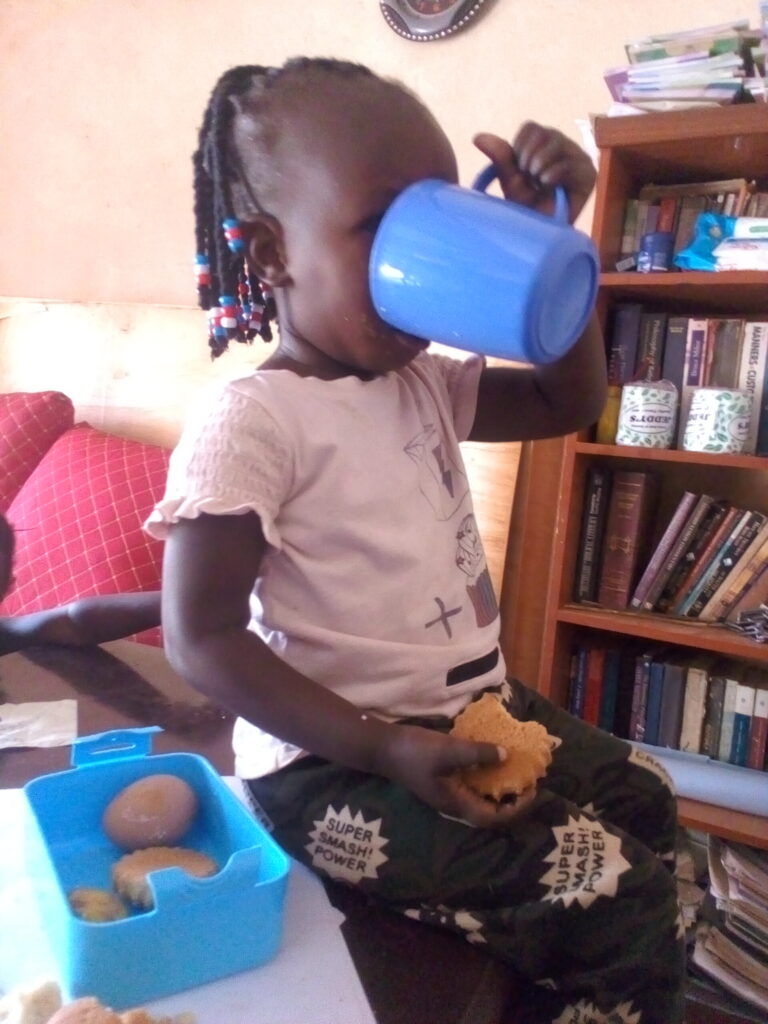
School feeding programs play a vital role in supporting vulnerable children, adolescents, and youth by ensuring they receive at least one nutritious meal a day while attending school and learning activities. These programs help improve school attendance, concentration, and academic performance, especially among children from low-income and food-insecure households. By addressing hunger, Hope Builders creates a more stable and supportive learning environment where children can focus on education, innovation, and personal development.
Feeding programs also strengthen child protection by reducing the likelihood of absenteeism, dropout rates, and engagement in harmful survival activities such as child labor. In addition, they complement education, and life-skills development by ensuring that learners are physically and mentally prepared to participate fully in classes and innovation activities.
A hungry child will always concentrate On the biting hunger than the classroom activity.
However, sustaining such programs requires consistent funding, strong community involvement, reliable food supply chains, and proper infrastructure such as kitchens, clean water, and storage facilities. Integrating school feeding with health, nutrition education, and education support services further enhances long-term impact.