Children
Why Y-Care’s Work Matters
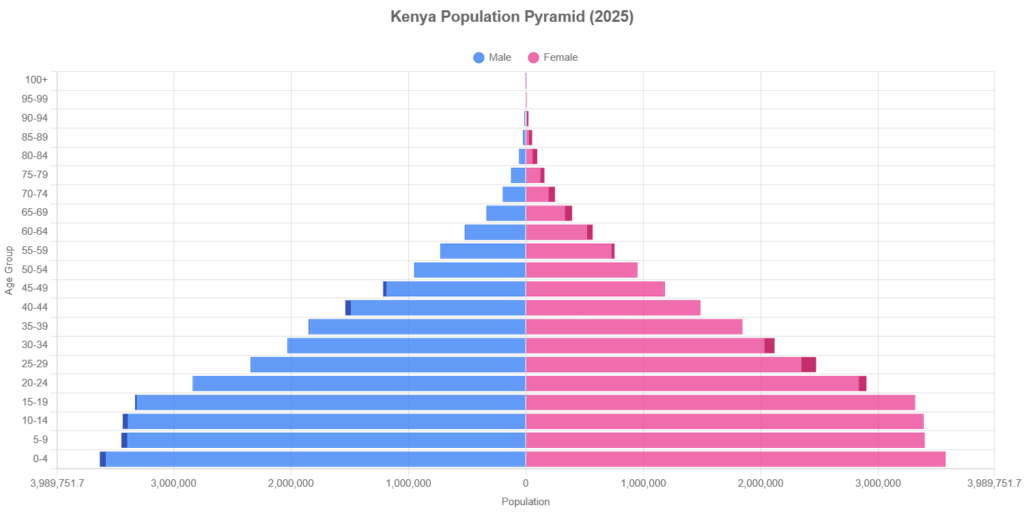
Kenya has a rapidly growing young population, creating both an opportunity and a challenge for national development. Current estimates indicate that Kenya’s population is approximately 57.5 million people, with 36.3% (20.9 million) aged 0–14 years and 57.8% of the population under 25 years of age. Additionally, recent national reports indicate that about 75% of Kenya’s population consists of young people, making investments in children, adolescents, and youth critical for the country’s future. (Population Pyramids)
Education remains one of the most important pathways out of poverty. Children aged 4–17 years account for about 36% of Kenya’s population, representing more than one-third of all citizens. While enrollment has improved significantly, challenges persist. In 2025, pre-primary enrollment reached 3.12 million learners, while primary and junior school enrollment exceeded 11.9 million learners, demonstrating the enormous demand for educational services and infrastructure. (education.go.ke)
Despite progress, many children remain excluded from education. Recent assessments found that 5.8% of Kenyan children aged 4–17 years are out of school, with the highest burden occurring in arid and semi-arid regions. Adolescents aged 13–17 years account for nearly one-third of out-of-school children, highlighting challenges in school retention and transition.
Food insecurity continues to undermine learning outcomes. School feeding programs remain essential because many vulnerable children depend on meals provided at school for nutrition, concentration, attendance, and academic performance. Community experiences and recent discussions continue to highlight that hunger remains a major barrier to education, especially among vulnerable households. (Education News Kenya)
Furthermore, many schools still face shortages of classrooms, learning materials, qualified teachers, computers, internet connectivity, and ICT laboratories. As Kenya implements a digital and competency-based education system, unequal access to technology risks widening educational disparities between urban and rural learners. At the same time, youth unemployment and limited innovation opportunities prevent many young people from fully participating in economic development. (Education News Kenya)
Why Y-Care Matters
Y-Care responds to these challenges through research-driven and evidence-based interventions that focus on education, school feeding, classroom development, ICT laboratories, innovation, mentorship, and youth empowerment. By providing safe learning spaces, nutritious meals, digital skills, and opportunities for innovation, YCare helps vulnerable children and youth remain in school, improve learning outcomes, build employable skills, and break cycles of poverty.
The Gap Y-Care Seeks to Bridge
There remains a significant gap between the needs of Kenya’s growing young population and the resources available to support them. More classrooms are needed to accommodate increasing enrollment, more ICT and inovation laboratories are required to prepare learners for the digital economy, and more school feeding programs are necessary to ensure that hunger does not prevent children from learning. Research is also needed to identify the most vulnerable populations and guide effective interventions. (Population Pyramids)